Unlimited Vertical
Small Groups
Single Room Possible
1 tree per heliski-day planted



White Wilderness Heliskiing maintains high operational standards and a strong team-based approach to deliver a safety-focused program for our guests, in alignment with industry requirements and Helicat Canada accreditation.
Our guest safety program is built around six structured steps, beginning at booking and continuing through every day of the heliski experience.
Each step is designed to ensure guests are informed, equipped, and prepared to ski with confidence in the mountain environment.
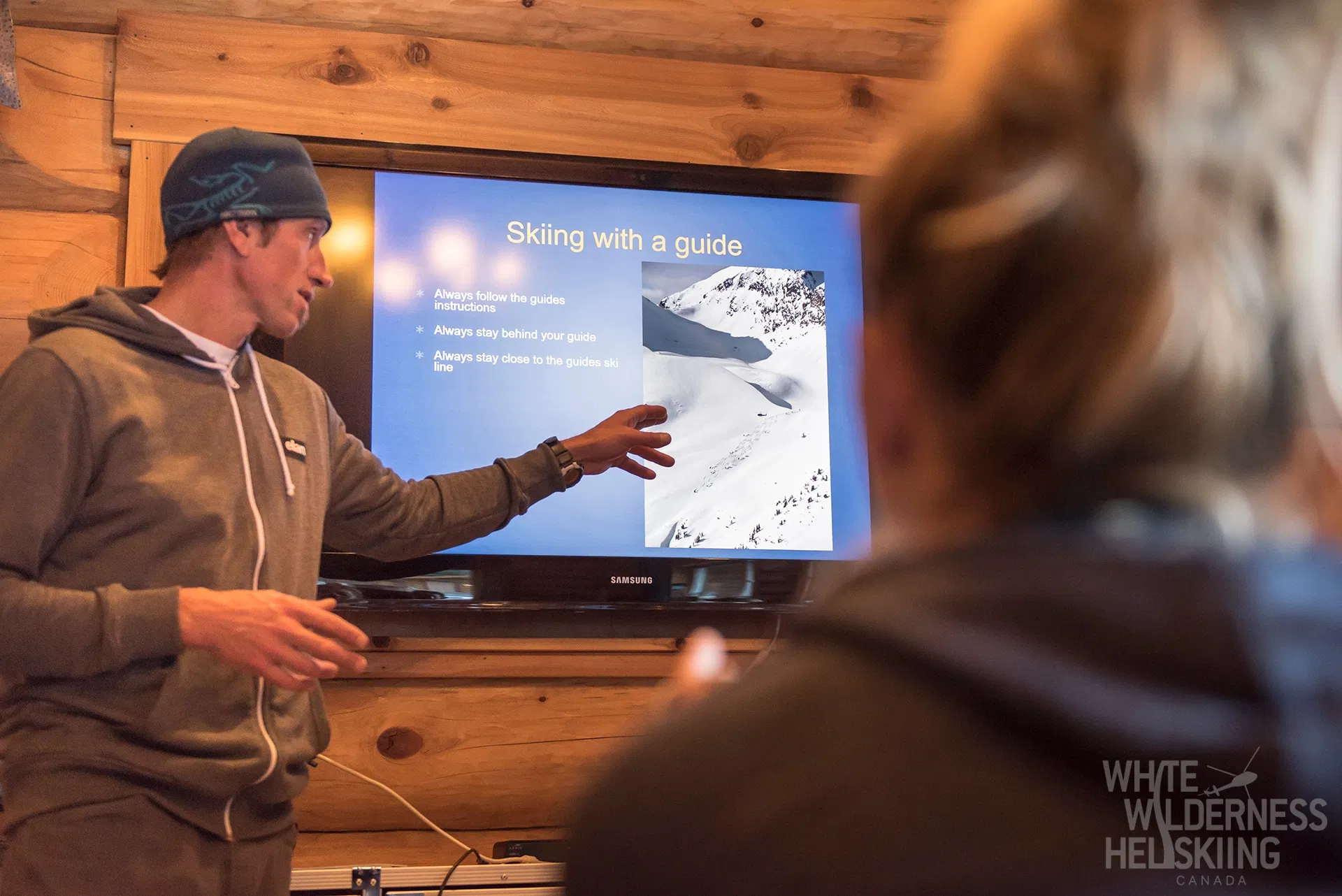
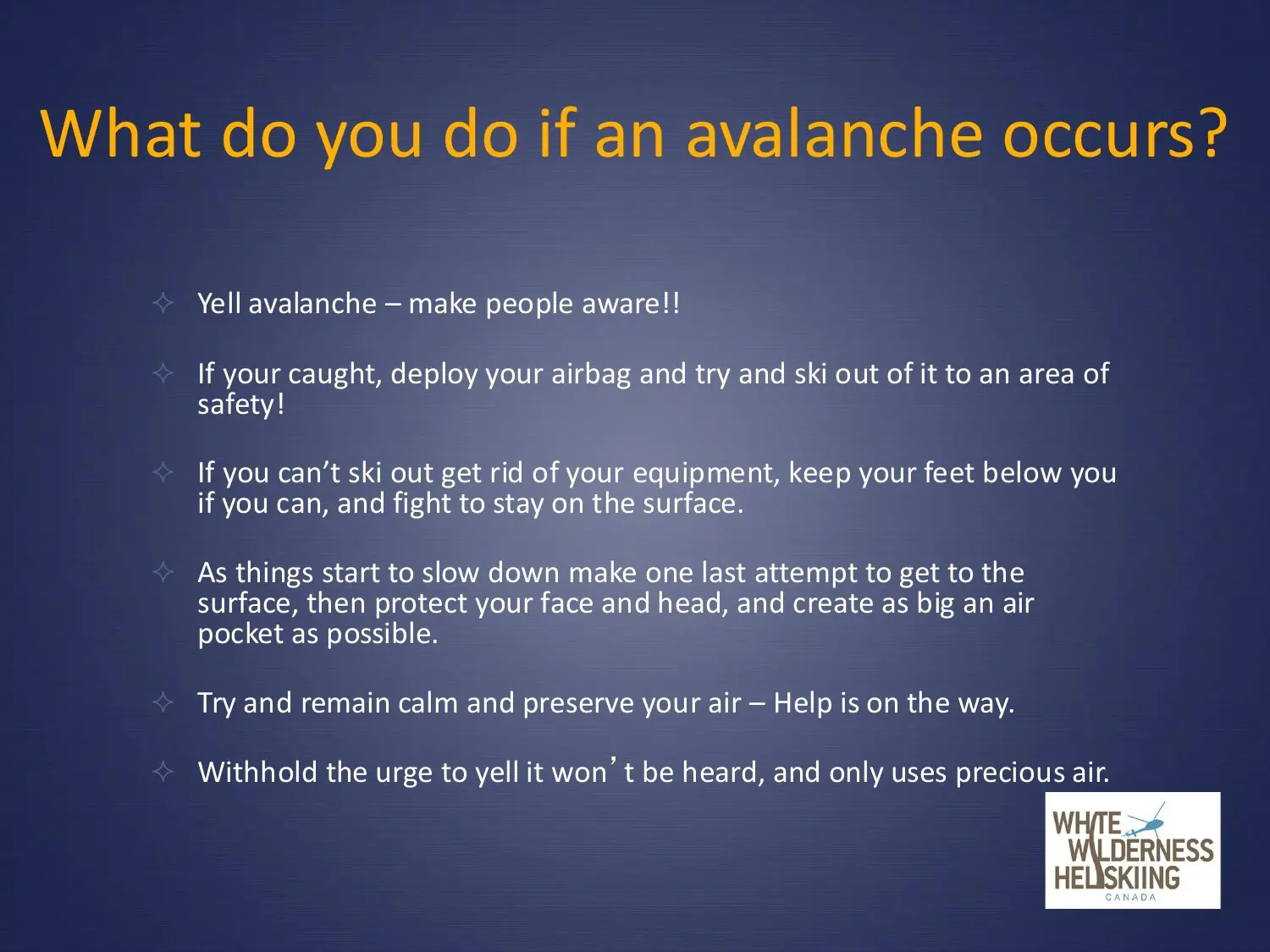
On the first morning right after breakfast there is a power point presentation mandatory for all guests. A lead guide explains in detail the risks involved in heliskiing and mountain travel. This presentation is about 45min long (on request, we can translate into German or French) and contains the following points that are in detail explained. This is also a primer and part of learning for the following outdoor exercise.
After the presentation the Guests will be handed the waivers in their language and have time to read and ask questions before they sign them. A guide will witness and is available for questions.
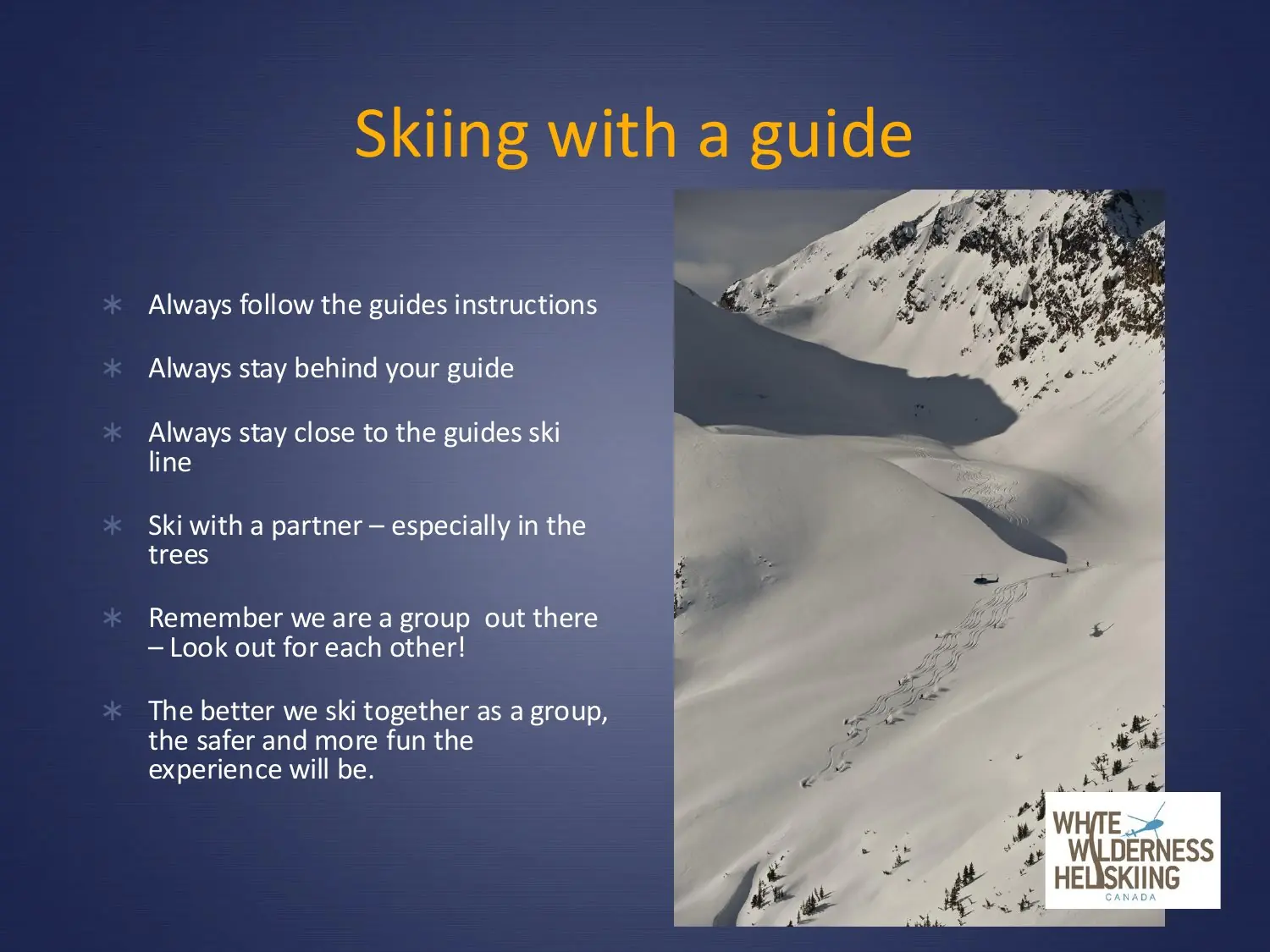
The fundamentals of how to ski with a guide: following instructions, maintaining spacing and tracks, regrouping above the guide.
Strict no drugs and alcohol policy in effect throughout the program. Guests under the influence will not be permitted to participate in heliskiing operations.
Guests will be divided into small groups for a mandatory hands-on outdoor safety training in a group exercise on the first day.
Guests will receive their individual safety equipment.
All safety equipment is tested for proper functionality and completeness the day prior to guest arrival, with results documented.
Each guest receives the following for use during their stay:
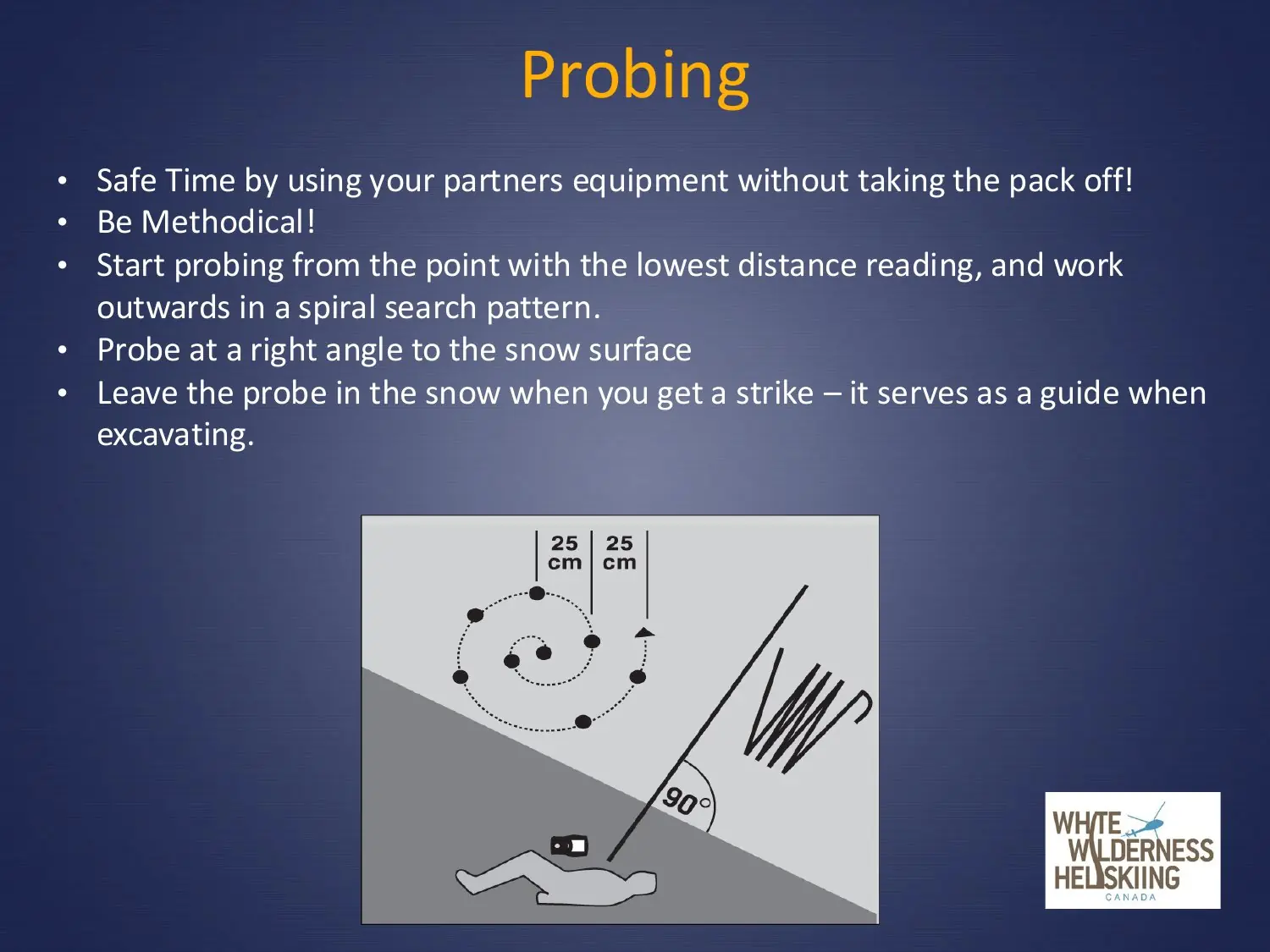
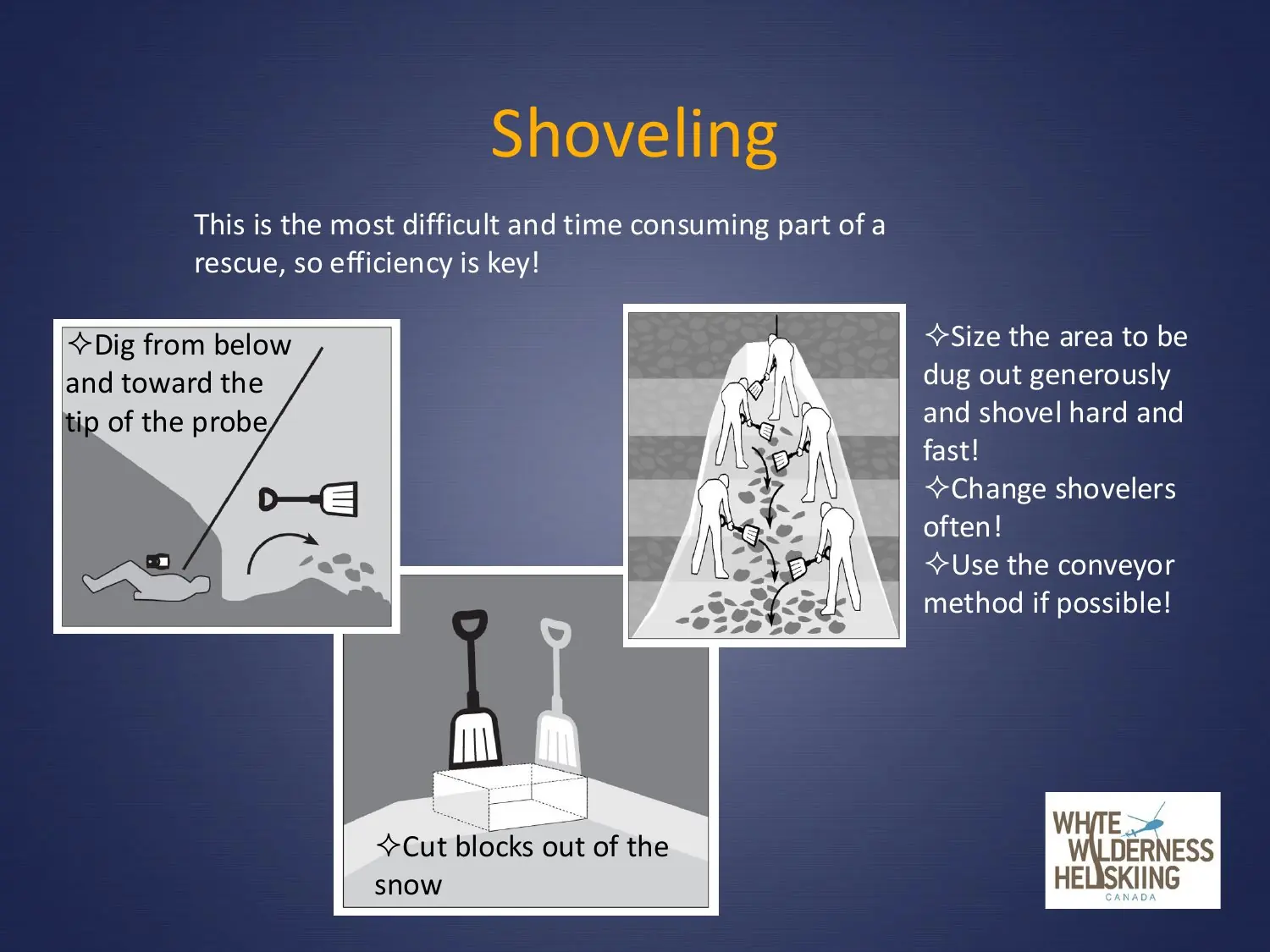
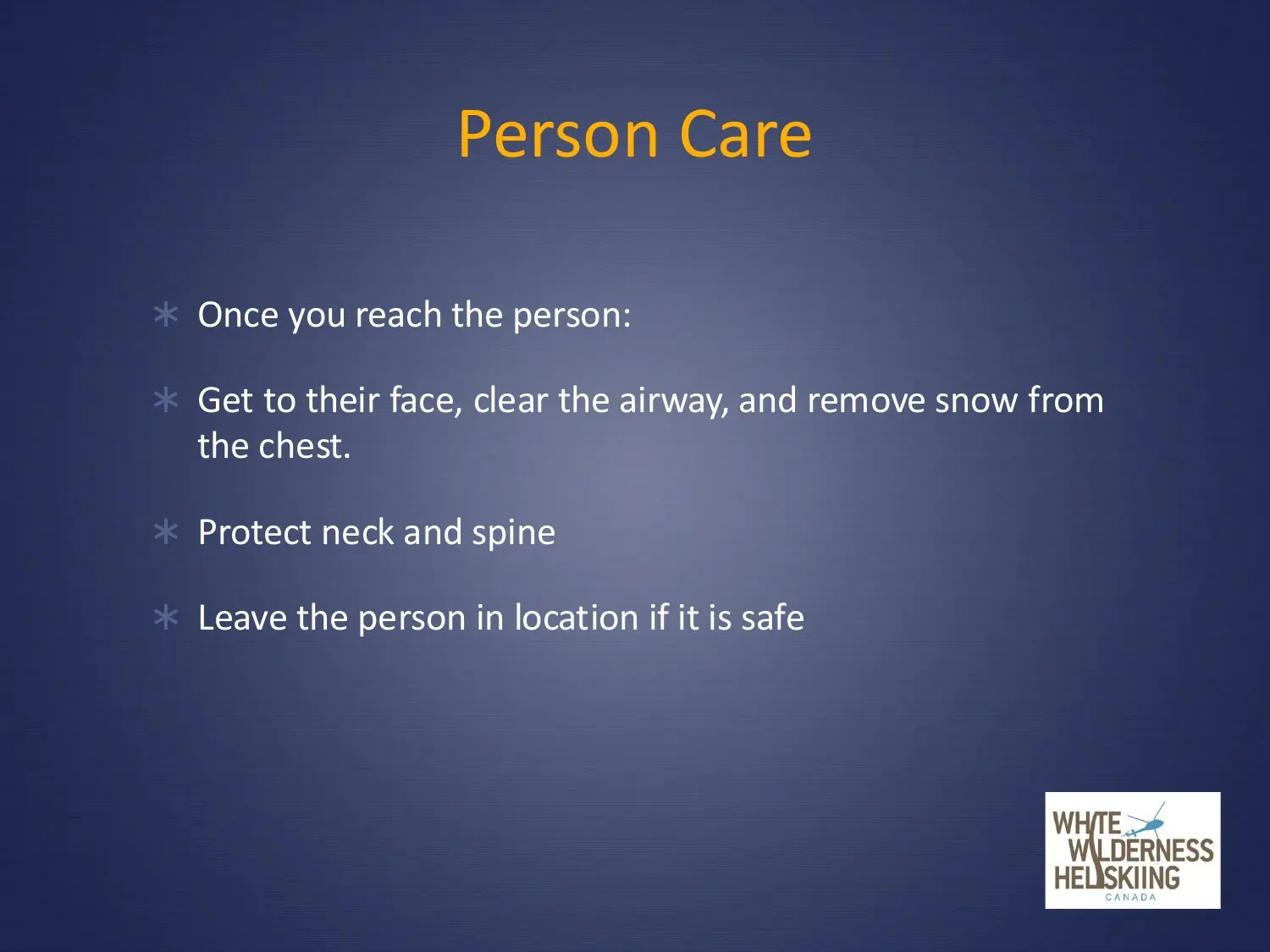
Guests receive an introduction to the equipment and will learn how to use each of the items within the outdoor training session. Training includes:
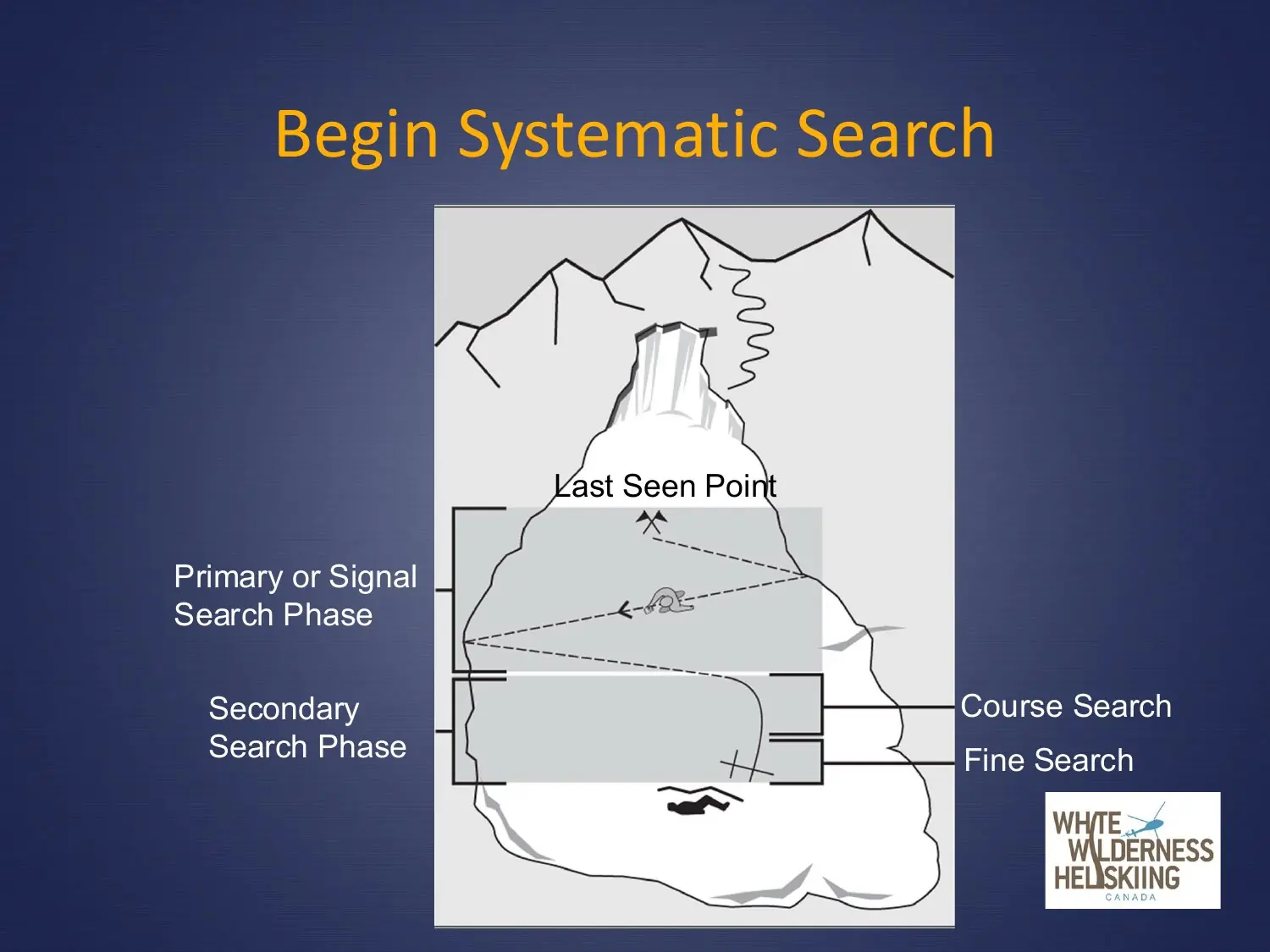
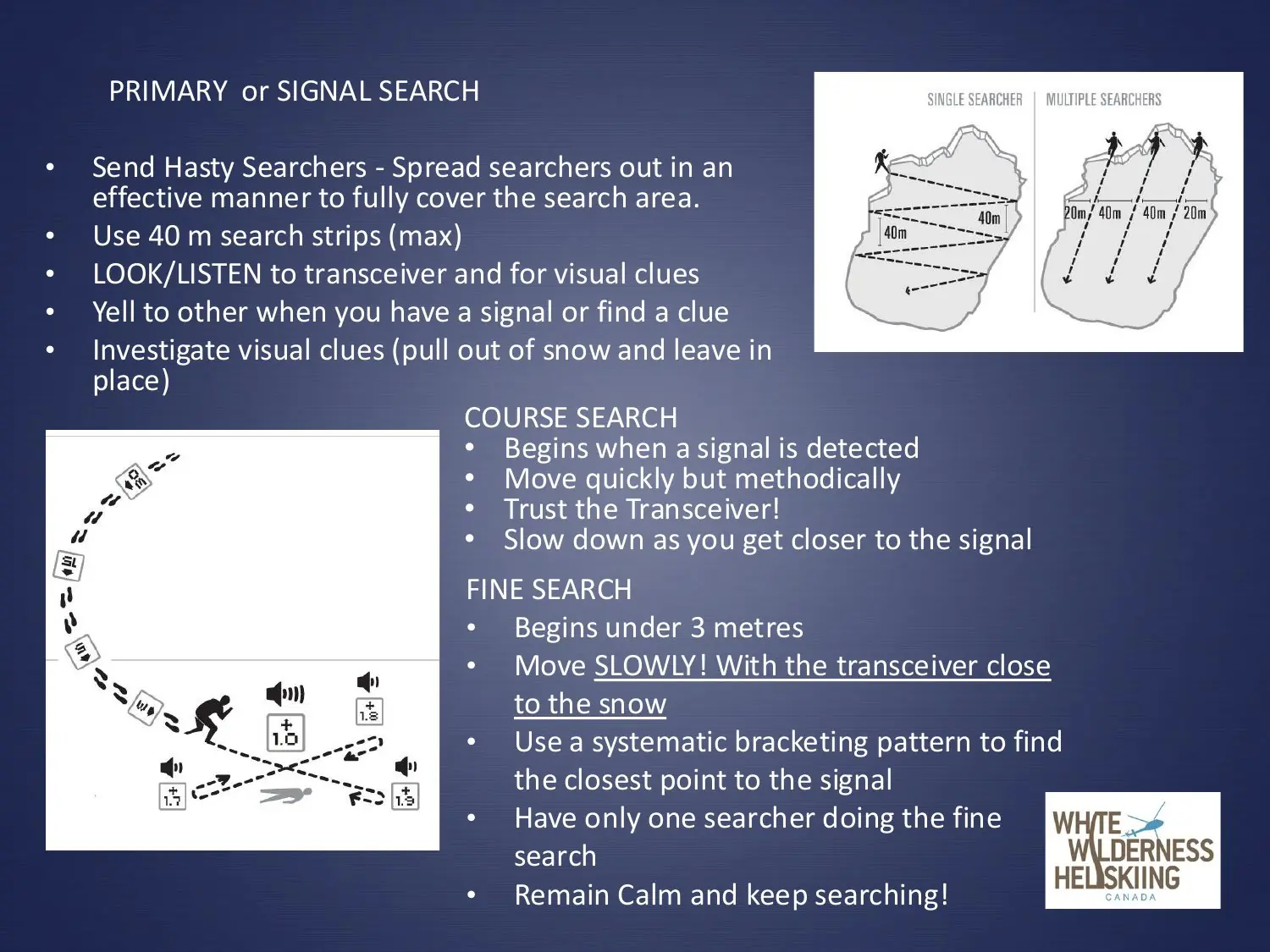
Search demonstration
Before the first flight, guests are briefed on every phase of helicopter operations: from approach and loading through to unloading and emergency procedures.
Throughout the ski day, guests receive ongoing briefings in the field to reinforce safe behaviour around landings, pickups, and on-mountain hazards.
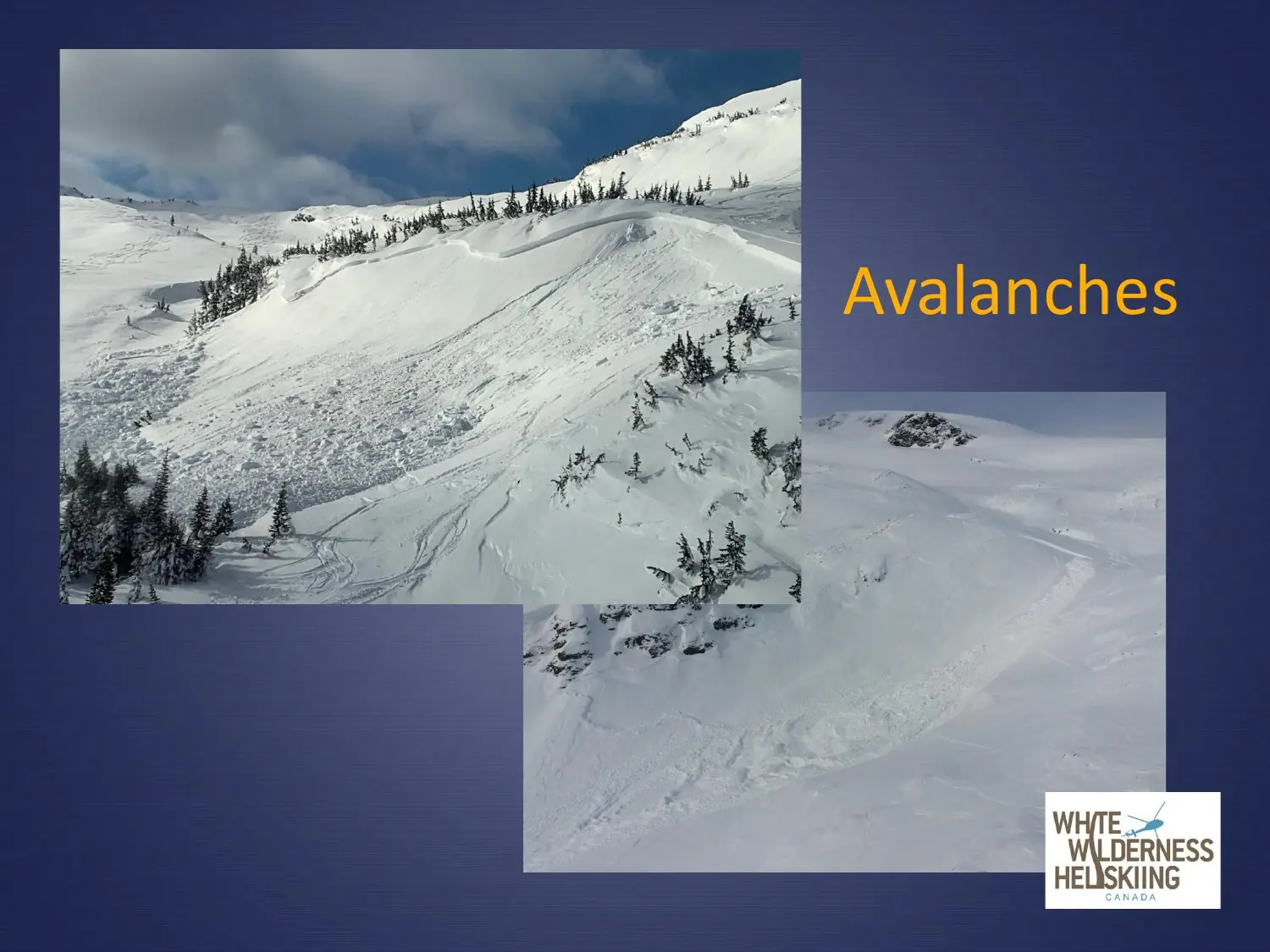
Before the first run of the day, the guide outlines key hazard considerations, including hazard ratings, what they mean for the terrain, expected avalanche conditions, and specific terrain features or run characteristics to be aware of. Where possible, examples are pointed out directly in the terrain.
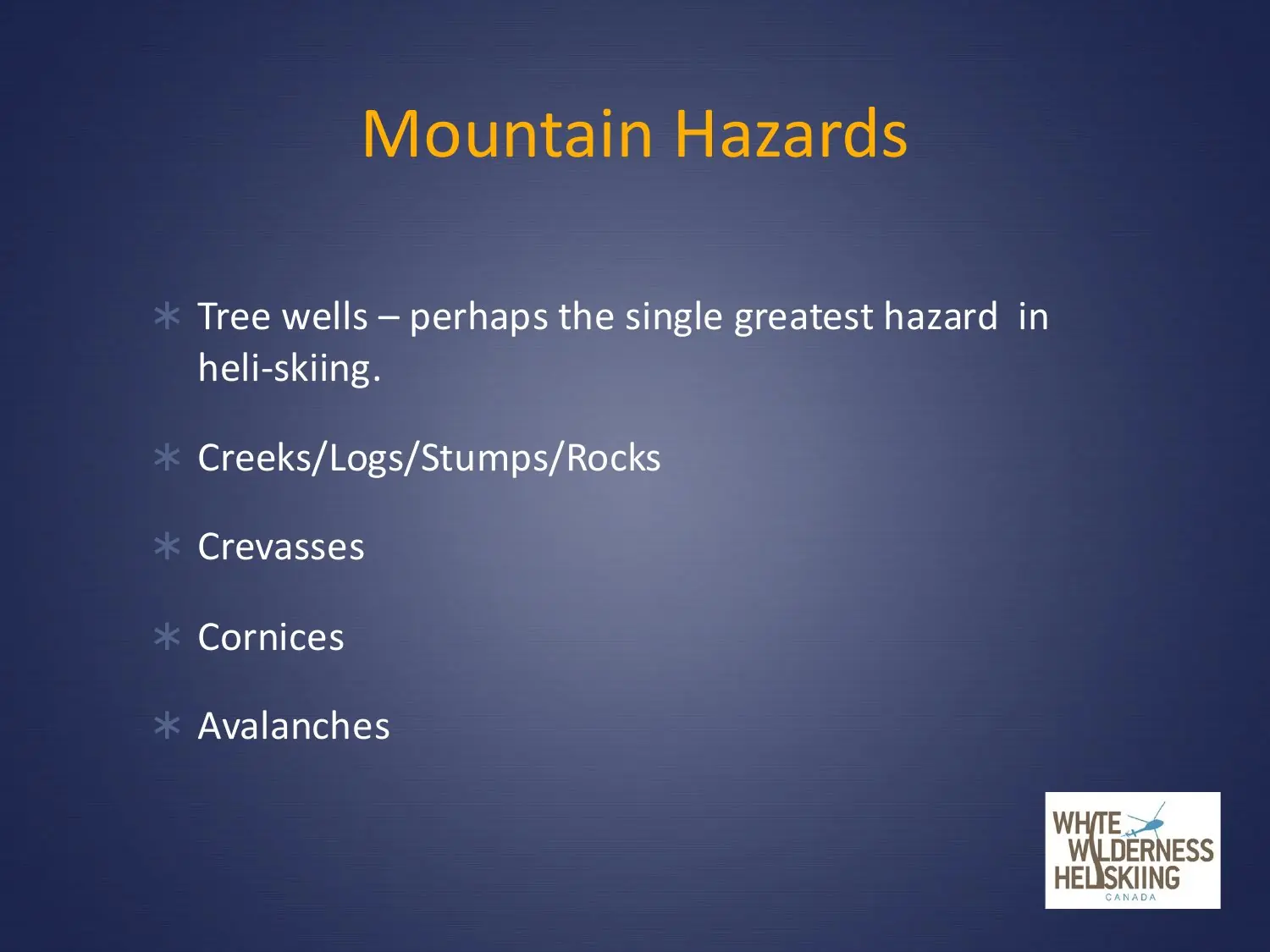
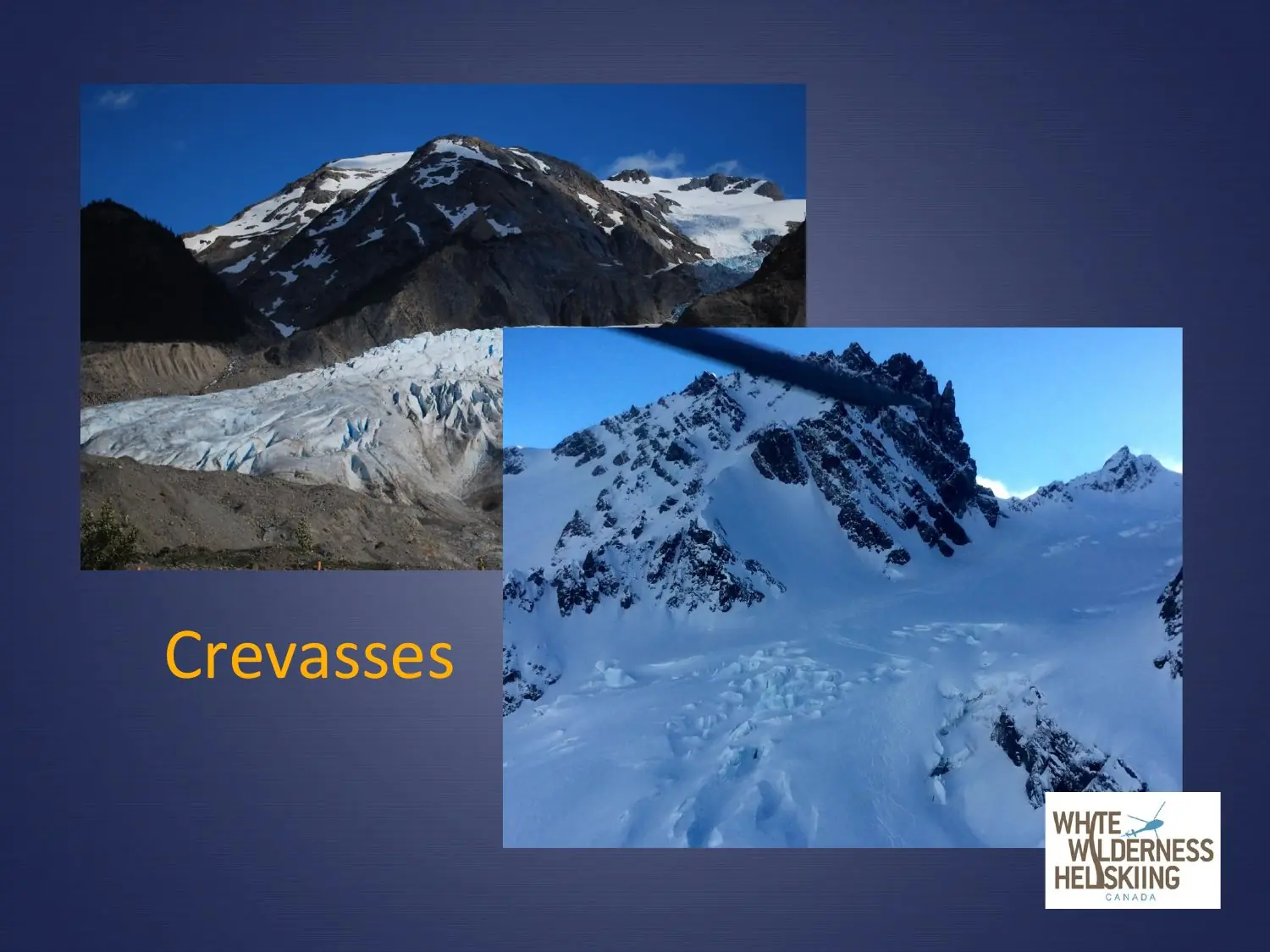
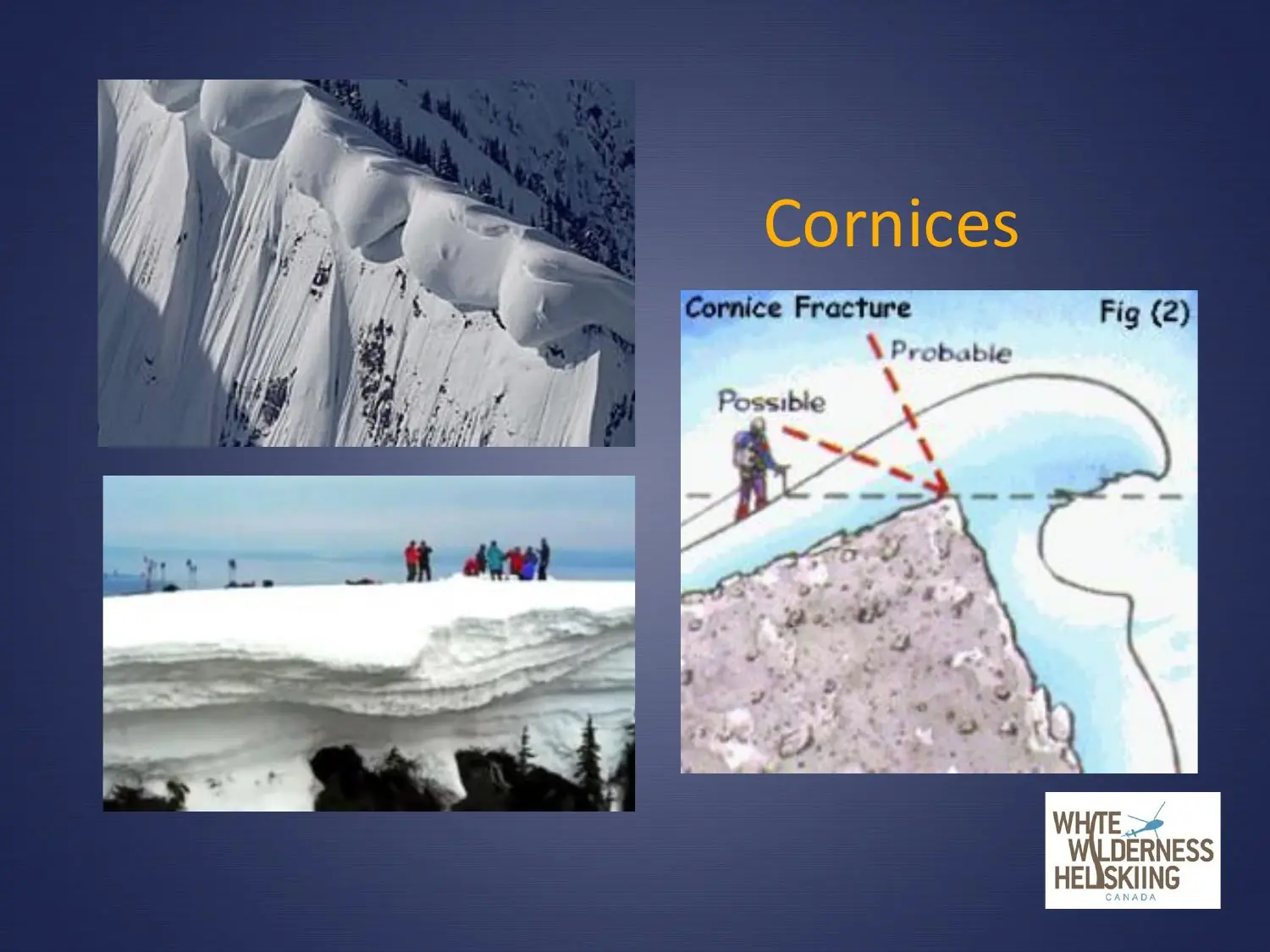
Additional hazards such as cliffs, crevasses, poor snow quality, inadequate coverage, cornices, and open creeks are also discussed.
Throughout the ski day, guests receive briefings on each run, including run name, length, general direction, and key characteristics. Guides provide clear instructions on maintaining safety distances, where to ski, and where to regroup. If conditions change during a run, guides communicate updates via radio.
Guides also maintain ongoing communication with each other throughout the day, sharing observations of hazards with other groups and helicopter teams.
How does the Guiding Team collect and process information and conduct a daily hazard evaluation to come up with a plan for the day?
The ski day begins with a guides meeting at 06:30, with some team members gathering information in advance to present at the start of the meeting.
The meeting follows an established protocol developed within the guiding community (ACMG, CSGA, Canadian Avalanche Association (CAA), and Helicat Canada). This framework has been in use since the 1980s and continues to be refined and updated annually.
Records from each meeting are documented and shared twice daily on the InfoEx server, maintained by the CAA. This server is maintained by the Canadian Avalanche Association (CAA) and can be reviewed from any of the accredited members of these organizations at any time. WWH is also an accredited member of CAA and can obtain information from any operation in the area or in Canada through the InfoEx database.
InfoEx contributions from operators and members are a key input in developing the CAA’s Public Avalanche Forecast. Regional forecasters rely on this shared information, alongside observations collected by their regional field teams, to produce daily forecasts from their remote offices in Revelstoke.
The morning meeting is the foundation of every ski day. It brings together weather data, hazard observations, and operational planning so that the team is aligned before the first flight. The sections below outline the structured assessment that is carried out each morning.
The team works through a structured sequence: collecting data, reviewing the weather forecast, and establishing a hazard assessment. Each step contributes to the strategic mindset and operational plan for the day.
Data is collected from weather stations at different elevation levels in the surrounding region, including:
Collecting and analyzing InfoEx submissions from neighbouring operations.
Operations include: Northern Escape Heliskiing, Last Frontier Heliskiing, Skeena Heliskiing, Skeena Cat Skiing, Shames Mountain Resort, Great Bear Heliskiing, Bella Coola Helisports, Burnie Glacier Chalet, Alpine Solutions (CN Railway Safety), Brucejack Mine, and the Northwest Avalanche crews in Terrace and Stewart.
A standardized reporting format provides a detailed overview from each operation, including:
A weather forecast review & analysis is conducted:
Using this information, we update the snowpack structure summary and persistent weak layer assessment from the previous afternoon’s guides meeting, and develop a forecast of expected field conditions for the day.
The next step is to establish a hazard assessment for the day:
Avalanche problems are identified and defined by:
A graphical hazard chart is produced for each identified problem.
Hazard ratings are then established for each elevation band:
Hazard ratings are then established according to the North American Public Avalanche Danger Scale:
The relative importance of avalanche problems is ranked (e.g., wind slab, persistent slab, wet loose).
Forecast confidence is also assessed:
Additional comments are recorded to capture key considerations, such as:
The team establishes a strategic mindset for the day based on current conditions, selecting from the following approaches:
The last step before submitting the Hazard Assessment is identifying operational hazards:
In the ski program
Team member issues are also discussed – fatigue, stress, illness…
In the flight program
Groups are established based on guest bookings (groups wishing to ski together) or comparable skiing ability, with group weight also considered for operational planning.
Group lists are finalized and shared the evening prior, allowing guests to know their group placement and assigned guide.
The daily ski plan, including terrain selection, is developed collaboratively by the lead guides, guides, and helicopter pilot, and coordinated with the second team.
Throughout the day, both teams maintain continuous communication regarding changes in plans, weather, snowpack conditions, ski quality, and hazard assessments. This coordination is a critical component of both safety and the effective delivery of the ski program.
Throughout the day, guides conduct snow profiles where possible, recording and communicating results to other guides in the field.
A designated snow safety guide is responsible for conducting snow testing, profiles, run checks, and establishing or flagging landing (LZ) and pickup (PU) zones. This guide works in close proximity to the ski teams or alongside a certified assistant guide. Their findings contribute directly to field observations and ongoing snowpack and hazard assessments.
A daily snow safety objective is established during the morning meeting, with results reviewed and recorded during the afternoon debrief.
Guides also meet during the lunch break to review conditions and adjust planning for the afternoon.
During the ski day, a dedicated ground control person—typically the ski technician or a guide—monitors and records all flight movements from the lodge.
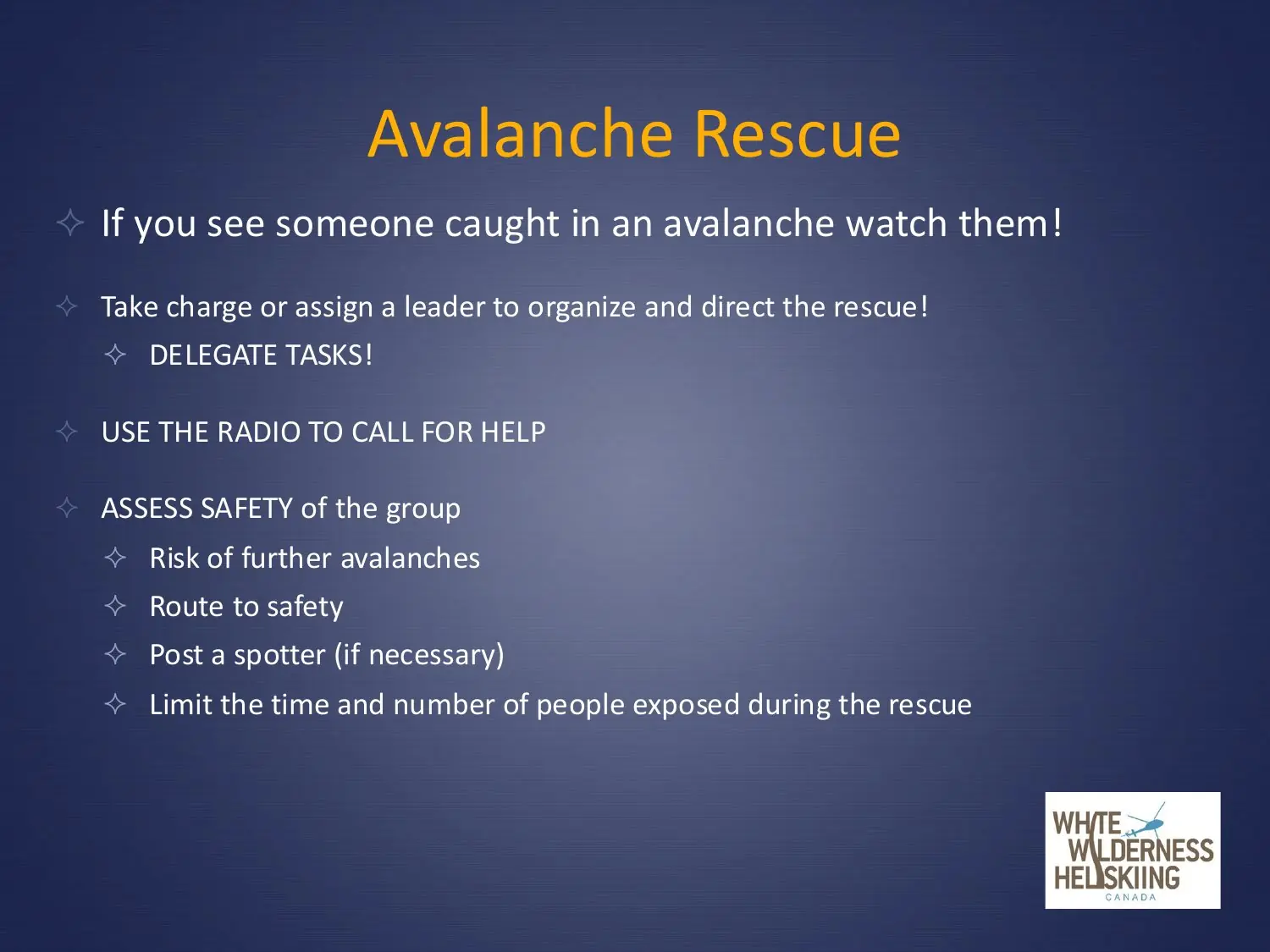
This individual is trained in emergency procedures and communications, and acts as the incident coordinator at the lodge, implementing the established rescue plan if required.
They also serve as the communication link between field teams and the lodge, coordinating guest pickups, helicopter refueling, and other operational needs.
At the end of the ski day, guides, pilots, and ground control gather for the PM guides meeting to debrief operations and document observations aligned with the morning briefing.
A nowcast of conditions and observations is submitted to InfoEx and contributes to the CAA’s daily reporting. This information forms the baseline for the following morning’s hazard assessment.
Key discussion and recording points include:
This process concludes a typical day of operations at White Wilderness Heliskiing.